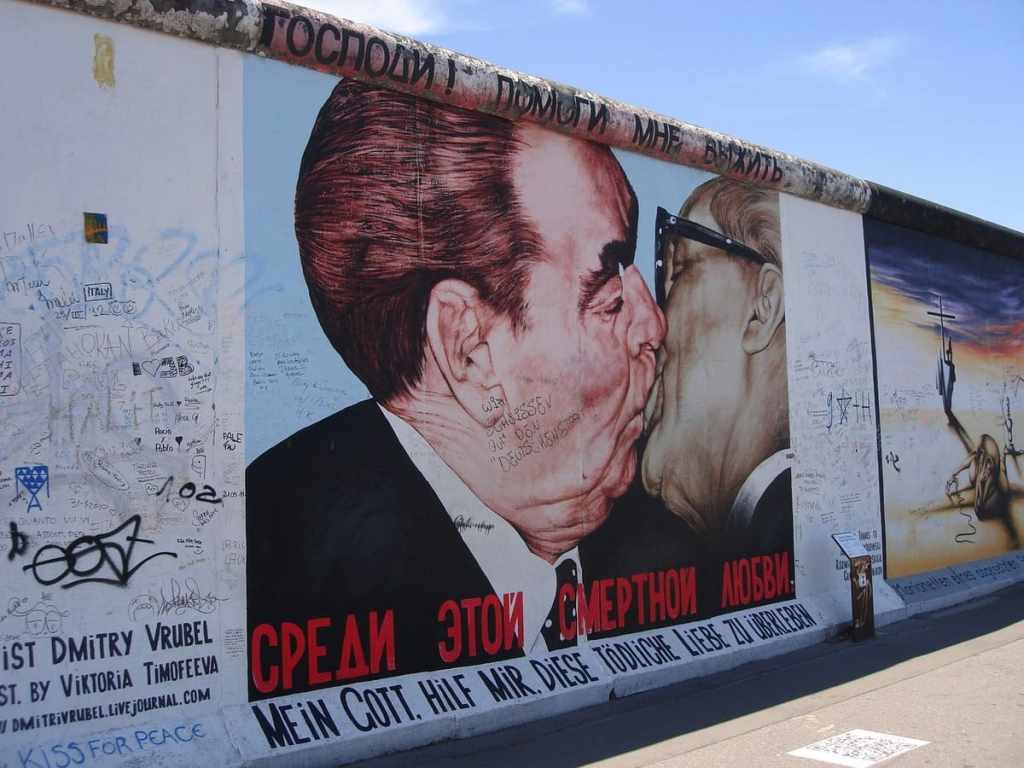
It may be unrealistic these days but artistic and film waves used to trigger important cultural and political movements. There were two main ones in the East before the fall of the Berlin Wall – the Yugoslav Black Wave and the Czechoslovak New Wave.
Here we’ll address the latter and focus on the most important aspects. Let’s begin.
Czechoslovak New Wave History
Sometimes addressed as the “Czechoslovak Film Miracle,” this wave began in the 60s, in what was then Czechoslovakia and today Slovakia and the Czech Republic.
Czechoslovakia was part of the Soviet Union, so there was almost no creative freedom for filmmakers. Even after the death of Stalin in 1953, it took several years for artists to achieve more liberation. Soviet communists used socialist realism in visual arts and literature to represent a perfect life under their rule.
However, cultural and political liberalization happened through the Prague Spring led by Alexander Dubcek and the Czechoslovak New Wave led by film artists. Aside from being cinematically and culturally powerful, it was also highly influential politically.
The peak of this wave was in the mid-60s, and then it was crushed together with the destruction of the Prague Spring. Nevertheless, Czech New Wave cinema remains crucial for current and future film artists.
Main Characteristics of the Czechoslovak New Wave
The main characteristics of the Czechoslovak film New Wave are similar to those of the Black Wave in Yugoslavia. After all, both waves were inspired and influenced by the French New Wave and Italian Neorealism.
Film directors criticized the socialist system using satire, dark humor, and bizarre situations. They often used unknown actors at the time and unconventional narrative structures. The focus was also on the problems of regular people during the difficult Soviet regime. Of course, this couldn’t be said directly, so irony was also important.
An avant-garde and brave wave without a doubt, especially during those dangerous times. Still, which one was more creative, the Czech or the Slovak New Wave?
Slovak or Czech New Wave Movement: Which Was More Influential?
On one hand, it’s pointless to divide the two since it was one movement. On the other, it’s undeniable that it was primarily a Czech New Wave with mainly Czech films and directors.
That’s why most films were in the Czech language with directors coming mostly from the prestigious FAMU in Prague. Slovak film directors had significantly lot less influence, however, we’ll still state some later.
Censorship of Films and Directors
Censorship is bad itself but it was ‘mercy’ considering the prosecutions film artists would get during Soviet times. Movies were censored and directors were officially banned from working for years.
During the Prague Spring, some New Wave films were shown even in domestic theaters. However, after the destruction of the Prague Spring through the invasion of the Warsaw Pact in 1968, films were banned by the communists.
One of the most significant directors of the Czechoslovakia New Wave, Milos Forman, had to flee the country and go to the US. His 1967 film, “The Firemen’s Ball” was seen as a critique satire on Eastern Communism, so it was banned after 1968. Another example is Pavel Juráček. His 1970 movie, “Case for a Rookie Hangman,” a satire on society, was banned after its release. What’s even more tragic is that Juracek wasn’t allowed to work anymore. Juracek’s FAMU classmate, Věra Chytilová also had many problems. Her 1966 film, “Daisied” was banned both from theaters and export. Her 1970 movie, “Fruit of Paradise,” was her last film before Vera was banned for eight years.
Věra Chytilová had various other political issues, and her life is a ‘story’ in itself. Many other film artists also had problems, which made the wave even more brave.
Most Important Czechoslovak New Wave Directors
Here’s a list of some of the most influential Czech New Wave directors:
- Milos Forman
- Věra Chytilová
- Pavel Juráček
- Jiri Menzel
- Ivan Passer
- Jan Němec
- Evald Schorm
- Hynek Bočan
- František Vláčil
Here’s a list of some of the most influential Slovak directs of the New Wave:
- Jaromil Jireš
- Juraj Herz
- Štefan Uher
- Juraj Jakubisko
- Dušan Hanák
Most Significant Films of the Czechoslovak New Wave
Here’s a list of some of the Slovak and Czech New Wave films:
- “The Firemen’s Ball” – Milos Forman
- “Black Peter” – Milos Forman
- “Loves of a Blonde” – Milos Forman
- “Daisies” – Věra Chytilová
- “Fruit of Paradise” – Věra Chytilová
- “Something Different” – Věra Chytilová
- “Case for a Rookie Hangman” – Pavel Juráček
- “Closely Watched Trains” – Jiří Menzel
- “Capricious Summer” – Jiří Menzel
- “Larks on a String” – Jiří Menzel
- “Intimate Lighting” – Ivan Passer
- “Diamonds of the Night” – Jan Němec
- “A Report on the Party and the Guests” – Jan Němec
- “The Return of the Prodigal Son” – Evald Schorm
- “The Devil’s Trap” – František Vláčil
- “Marketa Lazarová” – František Vláčil
- “The Valley Of The Bees” – František Vláčil
- “The Cry” – Jaromil Jireš
- “Valerie and Her Week of Wonders” – Jaromil Jireš
- “The Cremator” – Juraj Herz
- “The Sun in a Net” – Juraj Herz
- “Birds, Orphans and Fools” – Juraj Jakubisko
If you want to experience the best Slovak and Czech New Wave movies, you should begin with the list above.
Most Notable Film Awards
The Czechoslovak New Wave film won many awards abroad, even though mostly censored at home. The sad part is that film artists were censored, banned from work, and even had to leave the country. Fortunately, no one can stop an excellent piece of art from finding its way and audience, and the same goes for movies.
Czechoslovak New Wave films were nominated and won various awards at many worldwide film festivals, including:
- The Oscars
- Cannes Film Festival
- Chicago International Film Festival
- Karlovy Vary International Film Festival
- BAFTA Awards
- Venice Film Festival
Furthermore, there are many worldwide representations of this wave at film schools, festivals, and museums, even today.
Final Thoughts on the Czechoslovak New Wave
Undoubtedly one of the most influential movements in the East but also worldwide, the Czechoslovak New Wave remains an inspiration for new moviemakers. What makes it even greater is the courage of Czech and Slovak film artists to stay true to their ideology during extremely dangerous times. Every Slovak and Czech New Wave film is a testament to the courage and uncompromising artistic dedication.
If you want to learn even more you should purchase this book by Peter Hames, “The Czechoslovak New Wave.” If you liked this article, you can enjoy reading further by checking out my other blog posts!

 framebyframecritic
Leave a comment